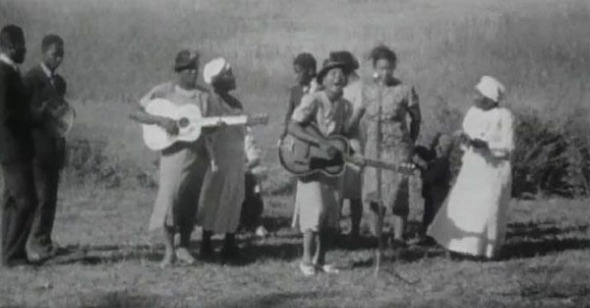
For Hurston, it was most important to define Black culture in continuity and coherence; but even as she nobly destabilized the disingenuous objectivity and authority of the discipline, she does not quite upend the colonial configurations of an institution that has generally pathologized Black life and transformed it into spectacle.
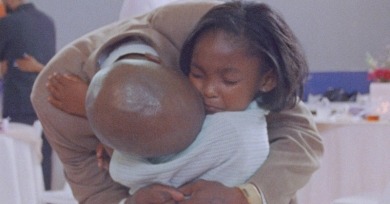
The most striking films I saw while attending the 21st edition of True/False Film Fest in the quaint college town of Columbia, Missouri, had me pondering fulfillment and disconnection in the technological age.
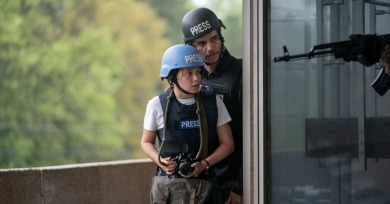
The 15-year-old me would have gotten a big kick out of Civil War—but for better or for worse he’s not writing this review.
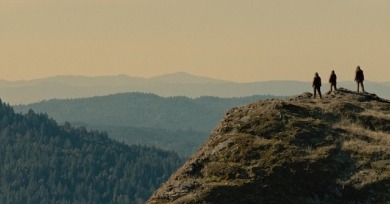
The Zellners do not lean into such a crude comparison, yet it is hard not to read the dissolution of the cryptid community as an echo of the real-life devastation settler-colonialism has wrought on this continent’s peoples.
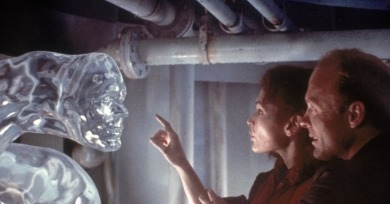
The technical bombast retains its power, but the extended cut is concerned with more emotional matters. In the early, banal behavior of the working-stiff crew, in their interactions and the unsaid meanings behind innocuous utterances and the contradictory, incongruous interactions of lapsed lovers, there is authenticity.
-390x204.jpg)
This film is incendiary, but it should be discussed not just for its controversy. What makes this film significant is how it engages with the iconography of IP superhero blockbuster cinema and with the trans film image.

I would have never imagined this stuff about A.I. would feel so contemporary by the time we would be ready to show the film. Not to mention how much more relevant it seems now with the actors’ and writers’ strikes still ongoing. It’s not that I didn’t foresee the dangers of artificial intelligence, but I thought it’d be something we’d have to deal with in 15 or 20 years.

The filmdemonstrates the way a certain strain of reactionary masculinity oppresses both the relatively privileged Thomas and the Malagasy characters, though a third act point-of-view shift ensures that this analysis does not equivocate the suffering of occupier and occupied.
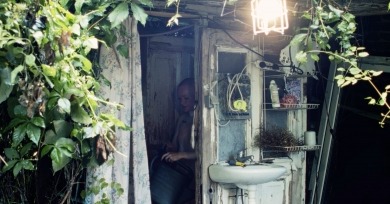
While it is now customary to view most online content in this manner, it is still surreal to see vertical images in a cinematic context, despite being, as “Shifting Perspectives” demonstrates, one of the initial ways moving images were conceived in the late 19th century.
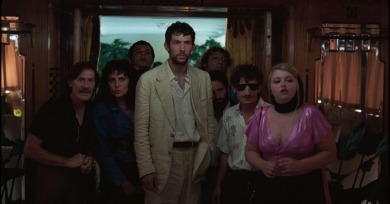
There is nothing new under the sun in the films of Alice Rohrwacher, which pay their respects to the beauty and mystery of older civilizations while suggesting that exploitation—of people, and of physical and spiritual resources— is almost as ancient as the world itself.
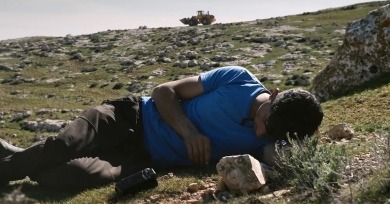
Threaded throughout No Other Land are scenes conveying the warm friendship between Abraham and Adra, who is initially skeptical of whether his companion’s exposés will have much effect; their chats, filmed by Szor, are oases of communion and symbolic potential in a rocky, increasingly insecure landscape.
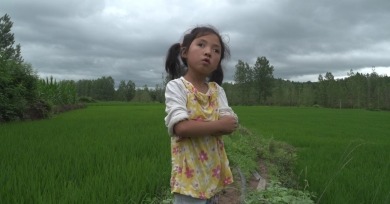
The village first drew Zhang Mengqi back as a subject in filmmaker Wu Wenguang’s Folk Memory Project, a collection of oral histories from people who lived through the Great Famine.
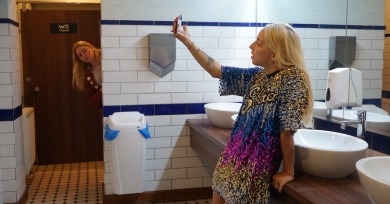
Like Godard, Radu Jude is acutely aware of how every image or sequence of images can be sorted into genres, textures, colors, references, and so on, categories whose associations stretch back into the whole of cinema’s past.

Being lost is a condition of possibility, which the film’s characters practice half with intention and half by circumstance.
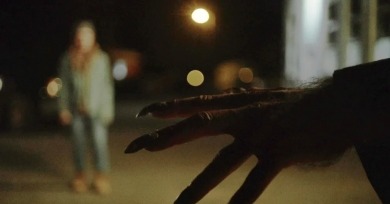
That the output of Fessenden over four decades has been taken for granted is one thing, but it is more like his being taken for granted has itself been taken for granted, as grimly self-fulfilling as any dark prophecy about pentagrams and the need to stay off the moors.